During my most recent colonoscopy, I found out that my ulcerative colitis is in remission! I was not expecting to receive such good news after being on Skyrizi for only six months. It still hasn’t fully sunk in yet, but a huge relief has been lifted off my shoulders. I can finally put the past six months behind me and move forward with my life. The best way I can describe how I feel right now is pure gratitude.
In this blog post, I would like to talk about the different types of remission in IBD patients. According to Google, the definition of remission is “the reduction or disappearance of the signs and symptoms of a disease.” Remission is a word often associated with cancer, but can also be used with chronic illnesses that have no cure. Remission and cure do not mean the same thing. The term “remission” implicates that the disease is dormant, but could come back. It can mean something different to each individual patient.
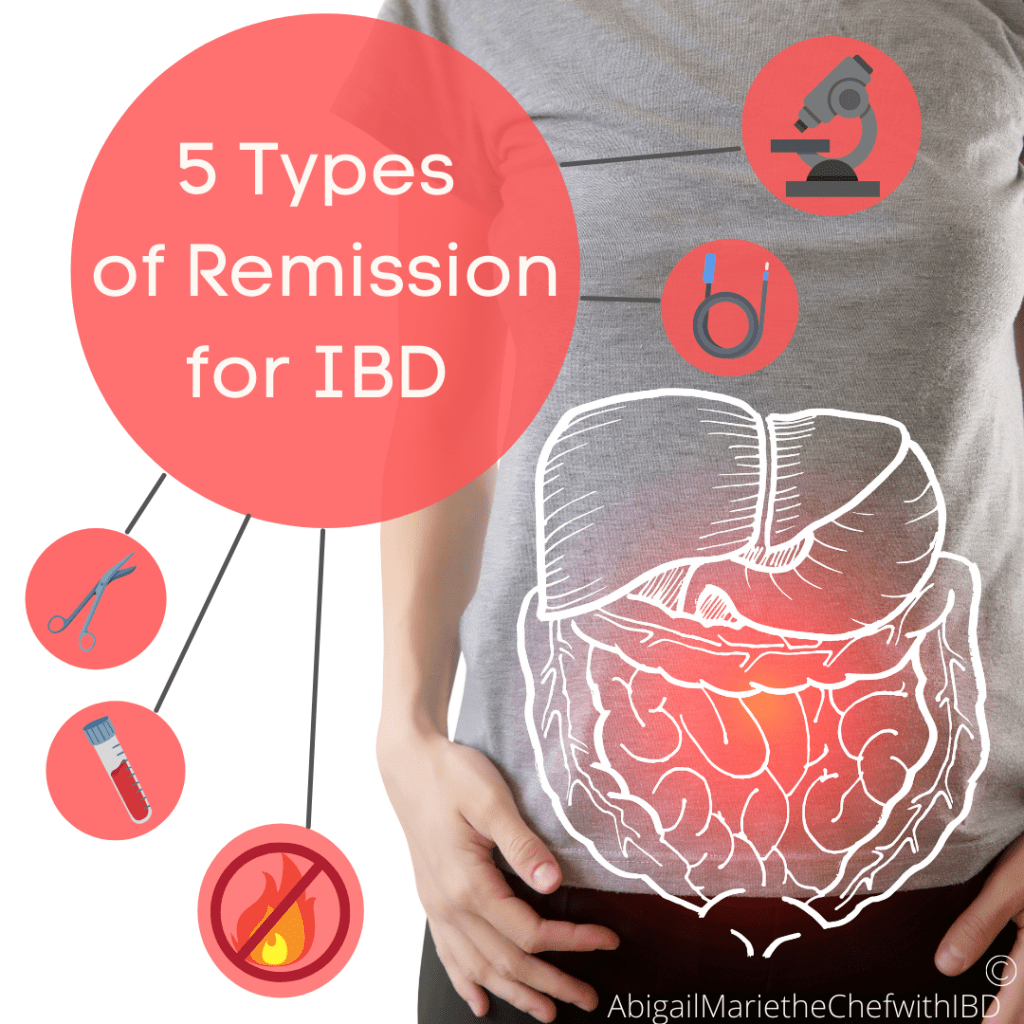
According to this article by Very Well Health, there are five levels of remission in IBD patients.
1. Biochemical remission
This is when lab tests such as bloodwork (c-reactive protein) or stool tests (fecal calprotectin) show no active inflammation.
2. Clinical remission
Clinical remission is when you are no longer experiencing symptoms, but there may still be inflammation on the inside.
3. Endoscopic remission
This is when no visual inflammation is seen during a colonoscopy. There are no ulcers, bleeding, or damage to the colon.
4. Histologic remission
Histologic remission is when biopsies are taken after a colonoscopy and there is no active inflammation at the cellular level. This can also be called deep remission.
5. Surgical remission
This is when there is no disease activity after surgical resection.
I myself have been in and out of these remission levels in my seven years with ulcerative colitis. Obviously, the ultimate goal is deep remission – to have no symptoms AND no signs of active inflammation at the cellular level. The longer you stay in remission, the lesser the chance of a relapse, developing complications, needing surgery, or even developing colon cancer. Doctors don’t want to see you in active disease for a prolonged period of time, which is why figuring out the right recipe of diet, sleep, reduced stress, and medication in a timely manner are essential to disease management.
What makes IBD so complicated is that it is an invisible disease. You can be feeling well on the outside, but still have signs of inflammation in the gut and not even know it. For about two years, my doctor was telling me that there was active inflammation at the cellular level and I would have to switch medications eventually. I didn’t take it as seriously as I could have simply because I wasn’t showing symptoms, so I thought it would just go away. But IBD tends to sneak up on you. This is why it’s super important to take action the minute things start to go awry, as it can have significant implications going forward. Once you are no longer in remission, it gets harder and harder to get back.
This blog on the Crohn’s and Colitis Foundation website highlights patient’s experience with this. It’s not so cut and dry for everyone. When I was first diagnosed with UC, my doctor didn’t go through these levels of remission with me. I learned as I went along. Having this knowledge can be a good benchmark for patients trying to get back to a healthy state. Engage in conversations with your doctor about what remission looks like for you and how you can get there. Don’t be afraid to ask questions. Advocate for yourself and listen to your body.
What misconceptions about remission did you have prior to reading this article? Let me know in the comments below!


